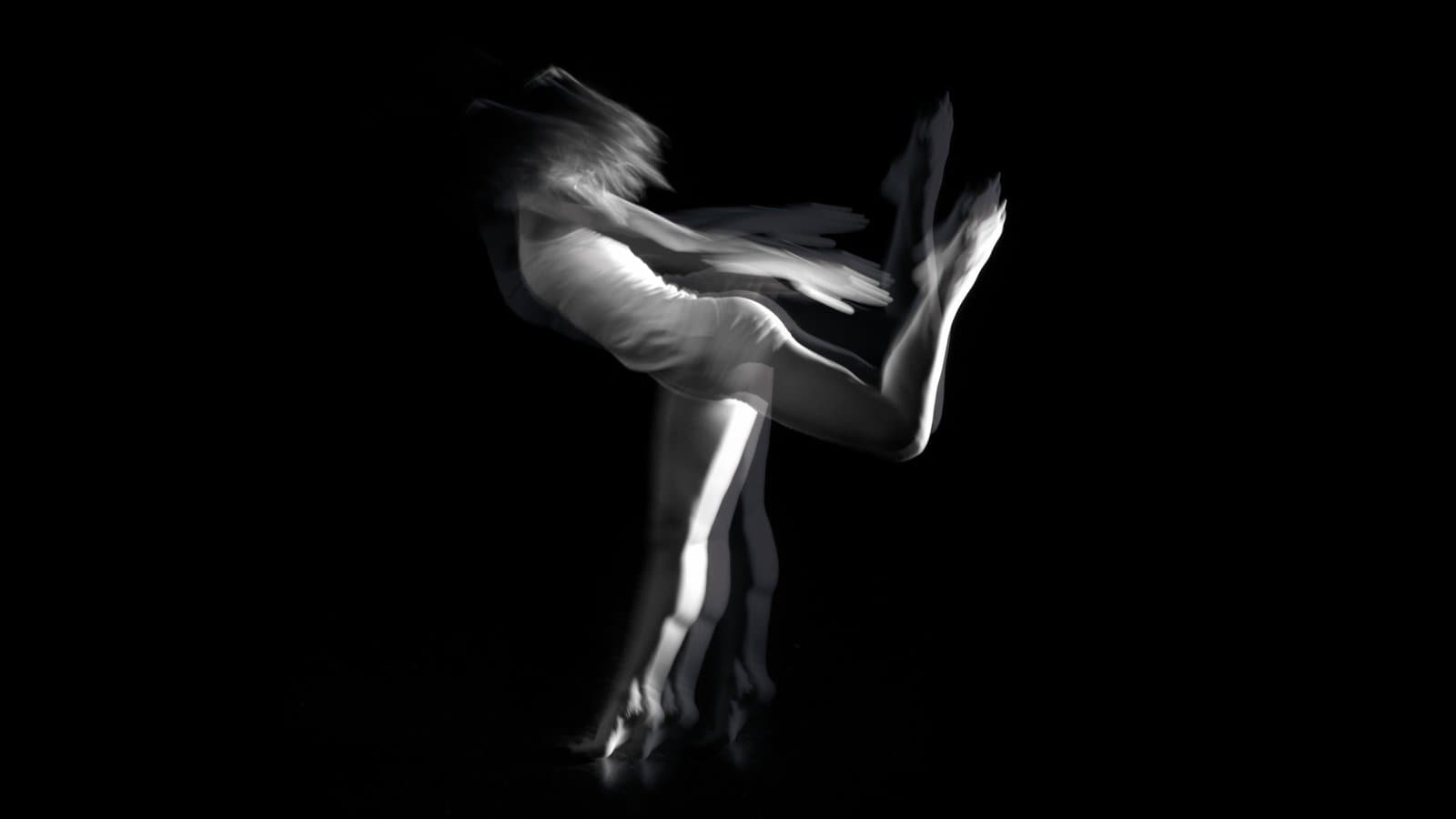
GLA55
Anne Teresa De Keersmaeker / Rosas
ICTUS & BL!NDMAN
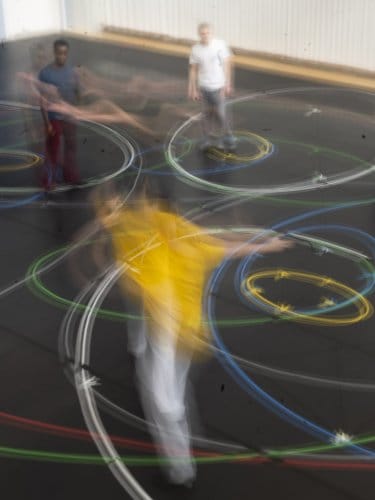
In 2026, Dance Reflections by Van Cleef & Arpels™ is supporting Anne Teresa De Keersmaeker for her new creation GLA55, 10 movements to the music of Philip Glass. Dance Reflections is also supporting the Festival d'Automne, La Villette and Berliner Festspiele for the presentation of this show.
Certain “early works” carry a very particular tone. They do not age, and continue to remind us of the surge of energy and radicality that accompanies the invention of a style. Today, Anne Teresa De Keersmaeker chooses, for the first time, to approach the “beginnings” of a giant of the minimalist adventure: Philip Glass. Radical and timeless, Glass’ music stands out for its paradoxical blend of hyper-formalism and a call to trance.
Music in Contrary Motion, Music in Fifths, Music in Similar Motion, Music with Changing Parts: the four pieces selected by De Keersmaeker all date from 1969–1970, a highly fertile period in the composer’s trajectory. They bear traces of a decisive encounter: during his studies in Paris a few years earlier, Philip Glass was engaged as an assistant by the Indian composer and sitar player Ravi Shankar. The latter asked him to transcribe his music into Western notation, a difficult problem that proved revelatory for Glass: “I erased all the bar lines. And suddenly, I saw the flow of the rhythm that I hadn’t seen before.”
It was at this moment that the young artist discovered the potential of music based on the combination of very brief patterns. This technique makes it possible to create a musical flow that is vertiginous and fast like a torrent—both repetitive and unpredictable. Upon his return to New York in 1967, another artistic shock awaited Philip Glass. Sobriety and reduction had become the watchwords of American modern art, championed by visual artists such as Sol LeWitt, Richard Serra, and Donald Judd.
This entire aesthetic adventure nourishes the project GLA55. In it, Anne Teresa De Keersmaeker turns to a guiding principle that recurs throughout her career: to exploit an to the fullest extent material reduced to its minimum. Added to this is the notion of trance, and the obsession with turning. Circles, spirals, and ellipses will play a central role in this ten-part work, along with the curve that geometers refer to as a lemniscate: the ∞ , the ribbon of infinity.
For this occasion, Anne Teresa De Keersmaeker brings together six Rosas dancers and the musicians of the ensemble Bl!ndman—whose 2024 recording of music by Glass (American Icons) was unanimously acclaimed by critics—as well as her long-time collaborators from the ensemble Ictus (for their sixteenth collaboration!). They will share their converging approaches to the music of Philip Glass, in search of a transcendental experience and a practice of dance that, like the music that carries it, “erases all the bar lines.”

Anne Teresa De Keersmaeker
In 2026, Dance Reflections by Van Cleef & Arpels Festival is presenting EXIT ABOVE - after the tempest and Rosas danst Rosas by Anne Teresa De Keersmaeker, in collaboration with the China Shanghai International Arts Festival.
about the partners
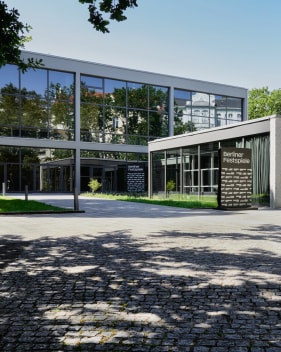
Berliner Festspiele
In 2026, Dance Reflections by Van Cleef & Arpels is supporting the Berliner Festspiele for four shows during its 2026-2027 season.

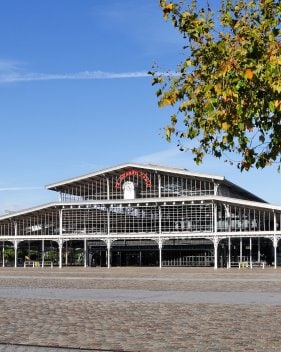
La Villette
In 2026, Dance Reflections by Van Cleef & Arpels is supporting La Villette for the presentation of three shows for the 2026-2027 season.

Festival d'Automne à Paris
In 2026, Dance Reflections by Van Cleef & Arpels is renewing its support for the Festival d’Automne to present 12 artistic works. A major sponsor since 2020, Dance Reflections is also committed to supporting the Festival in its solidarity initiatives in Paris and the Île-de-France region.