The Dance Theatre of Harlem, a historical haven for African-American dancers, returns to France
Laura Cappelle

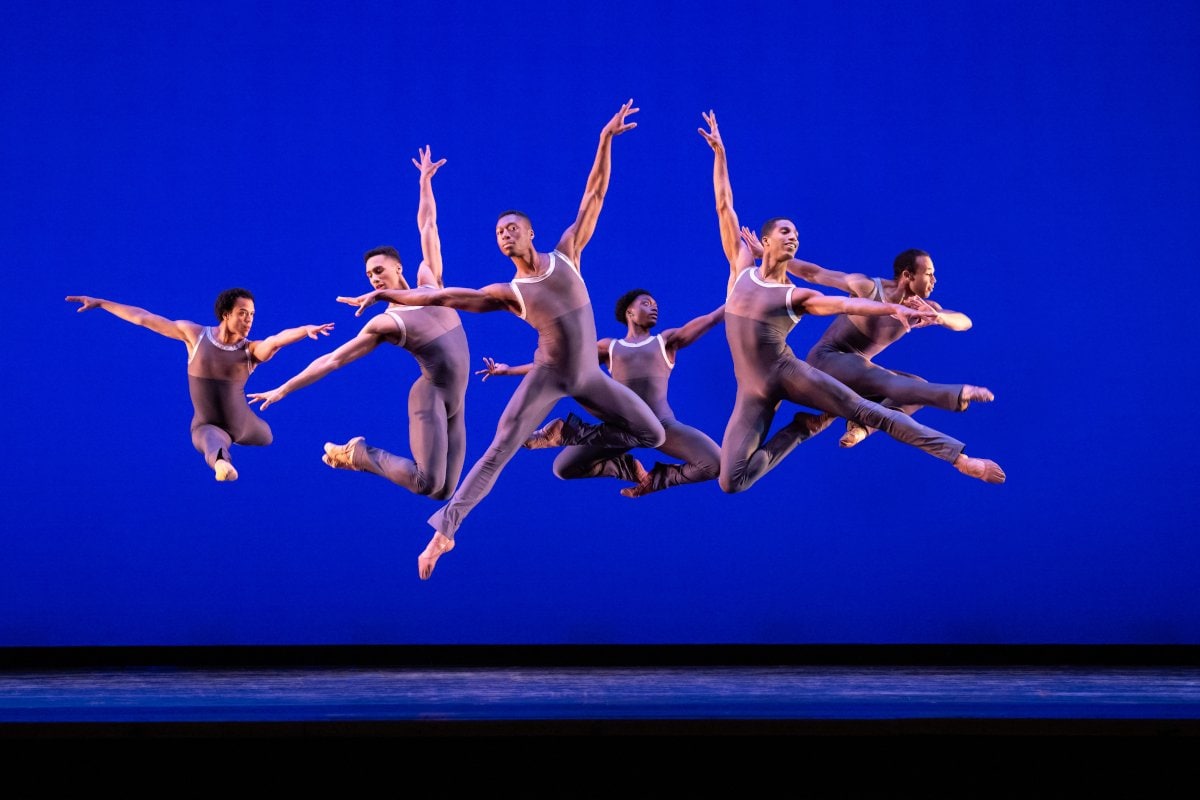
Founded at the end of the civil rights movement in the United States, the Dance Theatre of Harlem is a symbol: a company dedicated to African-American ballet dancers, who have so often been excluded from major companies. At a time of heightened political tension over racial diversity in America, the company is returning to France under the direction of choreographer Robert Garland.
 © Jeff Cravotta
1969. Barely a year after the assassination of Martin Luther King Jr., followed by the Civil Rights Act that prohibited racial discrimination on a national level, Arthur Mitchell laid the first foundation stone for the Dance Theater of Harlem. He was then one of the great names in American neoclassical dance. A star of the New York City Ballet, he had been the company’s first African-American principal dancer since 1955 – and had experienced firsthand the racial inequalities that permeated the dance world. Despite the unwavering support of George Balanchine, who created Agon with him in 1957, the pas de deux in which the dancer excelled could not even be shown on television: his partnership with a white dancer was not tolerated.
The Dance Theater of Harlem, located in the African-American neighborhood of New York where Mitchell himself was born, became a form of resistance – leading by example. The company’s current director, Robert Garland, remembers the first time he saw the DTH on stage in Philadelphia in the 1970s. “I must have been seven years old, and my mother had gotten free tickets through her work,” he says. His experience of dance at the time was limited to Busby Berkeley films. “And then I discovered this black troupe, dancing to the words of Dr. King. For me, it was astounding.”
A few years later, still profoundly marked by the experience, Garland began taking classes at Judimar, a school in Philadelphia where John Hines, a former dancer with choreographer Katherine Dunham, taught. Although black dancers had occasionally performed in ballets since the 19th century, as the Memoirs of Blacks in Ballet project has shown, their professional prospects remained limited: “At the time, most aspired to join Alvin Ailey or the Dance Theater of Harlem, but you had to have excellent ballet technique for Harlem,” explains Garland.
When he joined the company in the early 1980s, it was like an “incredible parade of the African diaspora,” he recalls. “There were up to 65 or 70 dancers, and half of them came from other countries, from South America, Europe...” Balanchine’s support for his former protégé enabled the company to develop its repertoire and arouse curiosity. “Arthur Mitchell had given Balanchine a physical vocabulary that came from the African-American experience,” Garland recalls. “When the DTH performed the ballets in question, the dancers highlighted elements from jazz, for example, that people hadn’t noticed before.”
“incredible parade of the African diaspora”
In addition to Balanchine’s works, the company’s repertoire includes new versions of the ballet repertoire that have left a lasting impression. In 1984, Mitchell created a unique Creole version of Giselle, setting the romantic ballet in 1840s Louisiana while remaining as faithful as possible to the choreography of Jean Coralli and Jules Perrot – now restaged by Frederic Franklin, a former star of the Ballet Russes de Monte-Carlo. In 1982, choreographer John Taras reinvented Firebird by the Ballets Russes in a Caribbean setting, which audiences will be able to discover as part of their four city tour across France this February and March. A “precursor to Afrofuturism,” adds Garland, the result of “the collision between Black American culture and ballet culture.”
Buoyed by the success of these pieces, DTH rose to international prominence in the early 1990s, performing in Russia shortly after the fall of the USSR and in South Africa at a time when the country was debating the end of apartheid. However, financial difficulties forced the troupe to take a long break from 2004 onward. “Historically, racially diverse companies have been dramatically underfunded,” Garland points out. “And the gentrification of Harlem had a significant financial impact.” Thanks to financial support from the Ford Foundation and under the direction of Virginia Johnson, a star dancer under Mitchell, the Dance Theatre of Harlem returned eight years later in a new form: the company now only had 20 dancers, to which students from the University of North Carolina School of the Arts could be added, as they are in Firebird.
 © Jeff Cravotta
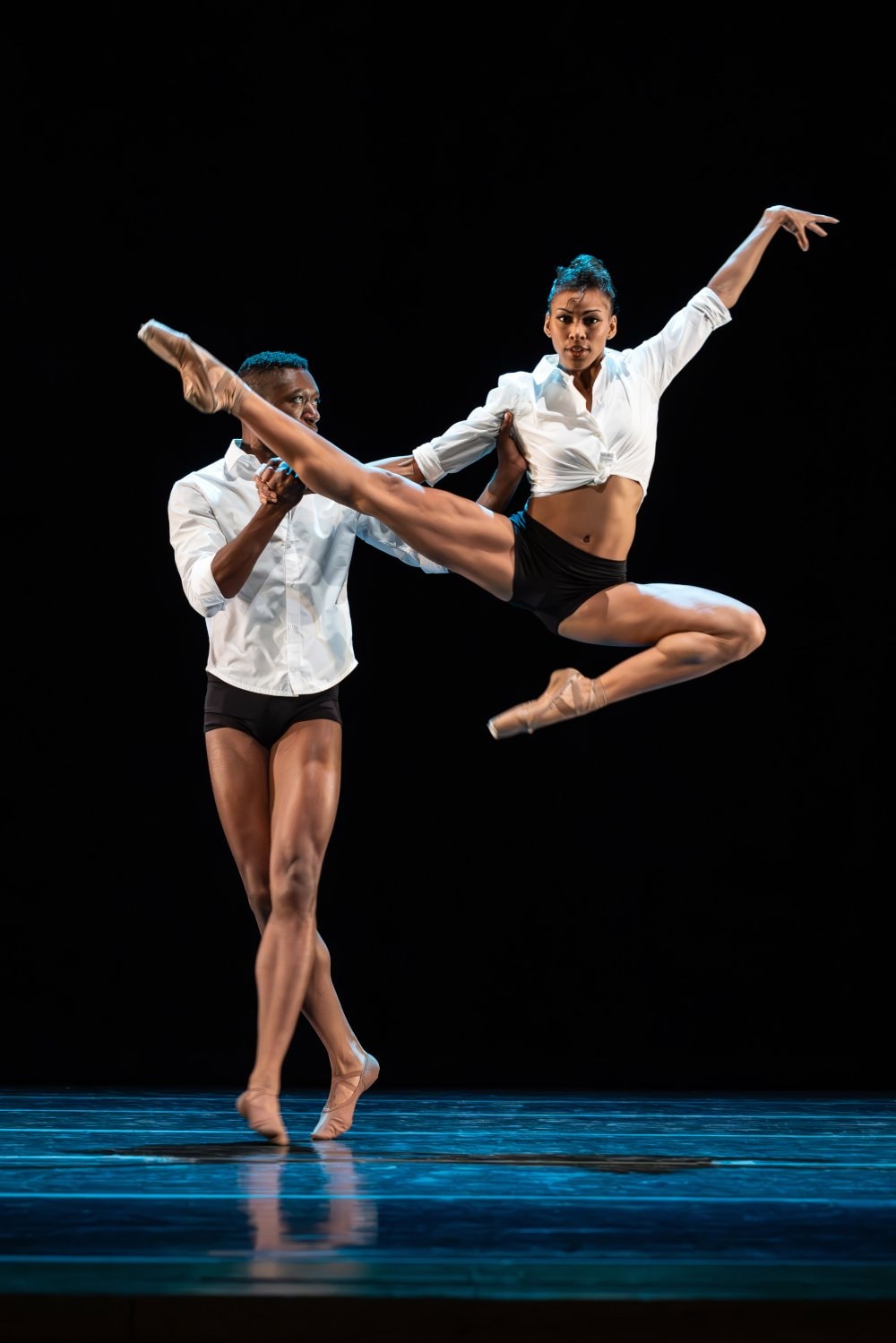
A longtime associate choreographer, Garland took over as artistic director in 2023, with a desire to “consolidate the legacy” of Mitchell, who died in 2018. For him, his predecessor’s vision is no less essential today than it was half a century ago. “During our hiatus, we ‘missed’ two or three generations of dancers. In predominantly white institutions, there might be one, two, or even three Black dancers in an evening of performances. The audience will never see ten or fifteen non-white dancers like they do when we perform,” he explains. “Representation isn’t everything, but it’s a start”
The repertoire also remains faithful to the principles established by its founder: the Balanchine lineage, which French audiences will experience with his Donizetti Variations; pieces that hover between neoclassical and contemporary dance; and some that are “rooted in the experience of the African-American diaspora,” as Garland explains. He himself embodies this plurality, which he has struggled to gain recognition for outside the company, as racial barriers persist for choreographers using classical vocabulary. In 2020, one of the New York Times’ headlines read: “The ballet world needs Robert Garland. Why isn’t it calling?”
France has the opportunity to make up for lost time with this tour. The DTH tour features Return, which combines classical vocabulary with hits by James Brown and Aretha Franklin, as well as New Bach, a tribute to Balanchine, and Higher Ground (2022), which draws parallels between the political climate of the 1970s and that of Donald Trump’s America.
“You could call it my protest ballet,” Garland says of the piece, inspired by Stevie Wonder’s political activism against racism. Higher Ground also embodies the confrontation between the experiences of people of color and the culture of classical ballet, which is evolving very slowly. “The collision is definitely there,” concludes the choreographer. “But we can find a resolution there, too.”
Laura Cappelle is a Paris-based journalist and scholar. In 2023, she was appointed associate professor at Sorbonne Nouvelle University. She edited a French-language introduction to dance history, Nouvelle Histoire de la danse en Occident (Seuil, 2020), and her new book, Créer des ballets au XXIe siècle, was published with CNRS Éditions in May 2024. She has been the Financial Times’ Paris-based dance critic since 2010, and the New York Times’ French theater critic since 2017. She is also an editorial consultant for CN D Magazine.
Éclairages