Thrice
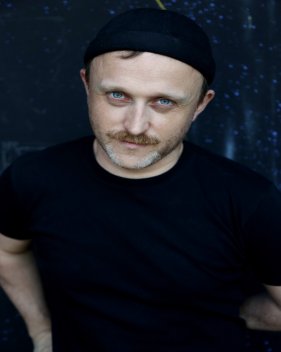
Damien Jalet
In 2026, Dance Reflections by Van Cleef & Arpels is supporting Chaillot - Théâtre national de la Danse for the presentation of Thrice by Damien Jalet for The Norwegian Opera & Ballet.
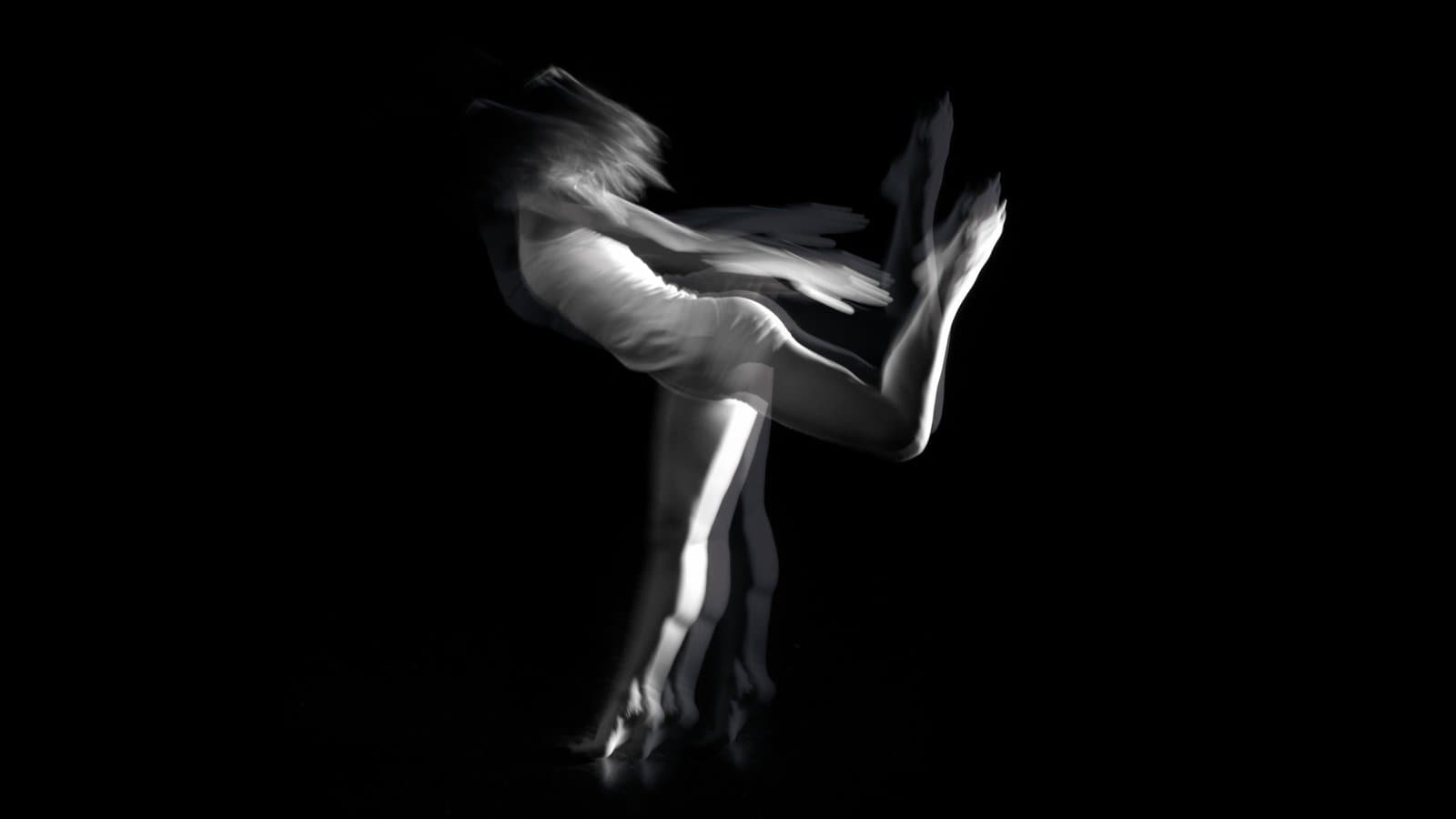
This piece, like its name suggests, is a triptych. The number three is an important one, both in the work of Damien Jalet and in the references he cites, from Greek tragedy to Japanese theatre, mathematics to religion ; past, present and future, body, mind and soul ; matter, time and space.
This number also and above all recalls the elements that Octavio Paz summons in his poem Wind, Water, Stone. These fundamental, complementary components are gathered here in three sequences, Gusts, Médusés and Brise-lames, around a literal common ground.
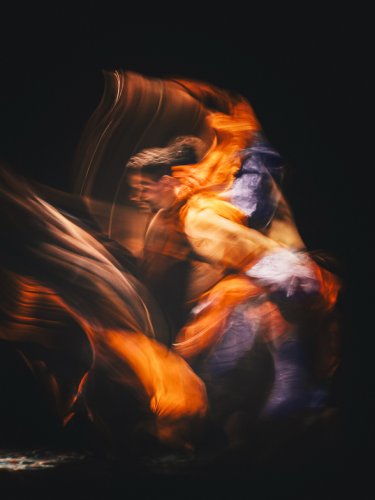
Indeed, during each new chapter, the performers roll out carpets, on the sides then in the back of the stage, thus building a decor, or rather a portal to another dimension. The wind, the sea and the water thus become the main characters that together hold the timeless and evolving language of this piece ; that of bodies attempting not to solidify.
Gusts, the first section, is about air – breath and movement— and pays homage to the force that carries us. With live music by acclaimed Norwegian saxophonist Bendik Giske, performing a newly commissioned original composition, Gusts becomes a dialogue between body and sound, highlighting the tension between gravity and centripetal force. With unpredictable outbursts and spiraling patterns, the dancers seem to surf on invisible air currents in a piece that feels like a succinct extract of an infinite loop.
Médusés, the second chapter, takes its cue from the myth of Medusa and the idea of being petrified by a gaze. Here, bodies resist between rigidity and fluidity, humor and dramatic intensity. The piece is an evolution of one of Jalet's early pieces Les Medusées created at the Louvre Museum in 2013, where three female dancers in synchronicity to a complex polyrhythmic score, only moving to hit sculptural poses, with a visceral freedom-seeking energy.
Brise-lames the final part, transports us underwater. Created in collaboration with visual artist JR and featuring live music composed and performed by renowned Japanese pianist Koki Nakano, the piece was first conceived during the pandemic in 2020 for nine dancers of the Paris Opera but never presented live due to national lockdown. The title refers to the wave breakers, wooden pillars planted on the shore to protect it from the violence of waves. With movements carrying both the gentle ebb and flow of a low tide and the intensity of overwhelming and crushing waves, Brise-lames is a reminder of both our resilience and need of connection in overwhelming situations.
Damien Jalet
In 2026, Dance Reflections by Van Cleef & Arpels is supporting Berliner Festpiele for the presentation of Planet[wanderer] by Damien Jalet and Kohei Nawa. Dance Reflections is also supporting Chaillot - Théâtre national de la Danse for the presentation of Thrice by Damien Jalet for The Norwegian Opera & Ballet.
about the partner
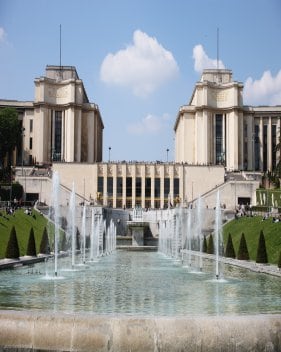
Chaillot - Théâtre national de la Danse
In 2026, Dance Reflections is supporting Chaillot - Théâtre national de la Danse for the presentation of several shows in the framework of the season 2026-2027.